
Research Breakthroughs: The Story of MYB
Twenty years ago, ACC was largely a mystery – a rare glandular cancer that was understudied and with very few treatment options available for patients with advanced disease. When Marnie and Jeff Kaufman founded ACCRF in 2005 after Marnie’s ACC diagnosis, they knew that had to change. What started with a group of hopeful and determined ACC families has grown into a global research network of scientists, physicians, and biopharmaceutical companies focused on treating and curing ACC.
Over the past 20 years, ACCRF has led a major research effort to develop our basic understanding of ACC’s biology, identify key drivers of the disease, support the development of therapies targeting those drivers, and bring new treatments to patients through clinical trials.
Understanding MYB
One of the biggest breakthroughs was discovering that a single gene, MYB, drives most cases of ACC. MYB is known as an oncogene because, when it’s switched on, it tells cancer cells to grow and survive unchecked. Scientists already knew that MYB played a role in some blood and colon cancers, but finding that most ACC tumors have high levels of MYB was a major breakthrough—it revealed how ACC develops and opened new paths toward treatment.

But discoveries don’t happen overnight. Early on, ACCRF funded efforts to collect ACC tumor samples and study their DNA to uncover which genes are changed as the cancer develops. ACCRF grantee Dr. Goran Stenman (University of Gothenburg) made the key discovery in 2009 that most ACC tumors exhibit changes in a gene called 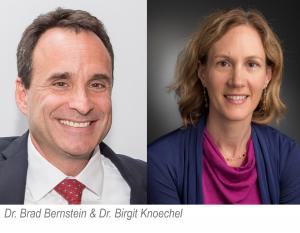 MYB. He also found that when MYB is turned down using lab tools, ACC cells grow more slowly in a dish. Later, ACCRF grantees Dr. Scott Ness (University of New Mexico) and Drs. Adel El-Naggar and Andy Futreal (MD Anderson Cancer Center) found that the few ACC tumors without MYB changes instead had alterations in a related gene, MYBL1—showing that nearly all ACC tumors activate one of these two genes. They also showed that most ACCs, regardless of the primary tumor’s original location in the body, have activation of MYB or MYBL1.
Before scientists could design drugs to block MYB, they first had to learn how ACC tumors produce so much of it. ACCRF grantee Dr. Brad Bernstein (Dana Farber Institute Cancer Center/Broad Institute of Harvard and MIT) and his postdoctoral fellow at the time, Dr. Birgit Knoechel (University of Utah Health/Huntsman Cancer Institute), uncovered the answer. By studying ACC tumor DNA, they found that when other genes fuse with MYB, they bring along powerful DNA switches called super enhancers. These super enhancers create a feedback loop that keeps MYB levels cranked up inside the ACC cell—fueling their relentless growth.
Targeting MYB
 With MYB confirmed as the main driver of ACC, ACCRF began partnering with biotech companies to develop drugs that target it directly. Two of these partners—Remix Therapeutics and Rgenta Therapeutics—created drugs designed to lower MYB levels inside cancer cells. Working with ACCRF, both companies showed that their drugs could shrink ACC tumors in laboratory models developed by ACCRF grantee Dr. Christopher Moskaluk (University of Virginia) with the support of ACCRF. Those promising results helped advance Remix’s REM-422 and Rgenta’s RGT-61159 into Phase I clinical trials for ACC patients over the past two years.
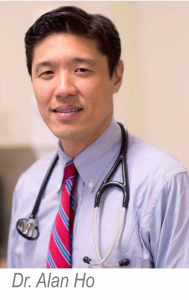
A true pioneer in ACC clinical research, ACCRF grantee Dr. Alan Ho (Memorial Sloan Kettering Cancer Center) serves as an invaluable bridge between MYB research and its real-world outcomes for patients. A key opinion leader advising both Rgenta and Remix, Dr. Ho has been involved in the development of MYB-targeted drugs, guiding research, and identifying the best approaches for treatment. As a tireless champion of clinical trials, he is actively involved in bringing novel drugs to ACC patients and closely monitoring their safety and effectiveness. As he noted, “It’s so important that ACC patients continue to have access to clinical trials built on the latest research. These MYB-targeted drugs not only expand treatment options for patients but finally help us to hit the main genetic target of this disease.”
A hopeful future
As of 2025, both Rgenta and Remix’s MYB-targeted drugs are closing in on the optimal dose for potential future clinical trials and are beginning to present encouraging clinical data. These trials are the culmination of two decades of tireless effort from numerous dedicated researchers, physicians, drug developers, and patients. ACCRF continues to push this work forward, and from the laboratory bench to the patient’s bedside, we are dedicated to every step of the journey that brings us closer to a cure.